
Journal · Iqama
A traffic fine does not stay on the road. It sits on the iqama.
The camera does not argue with you in the moment. It waits, and then a renewal or a flight finds the bill.
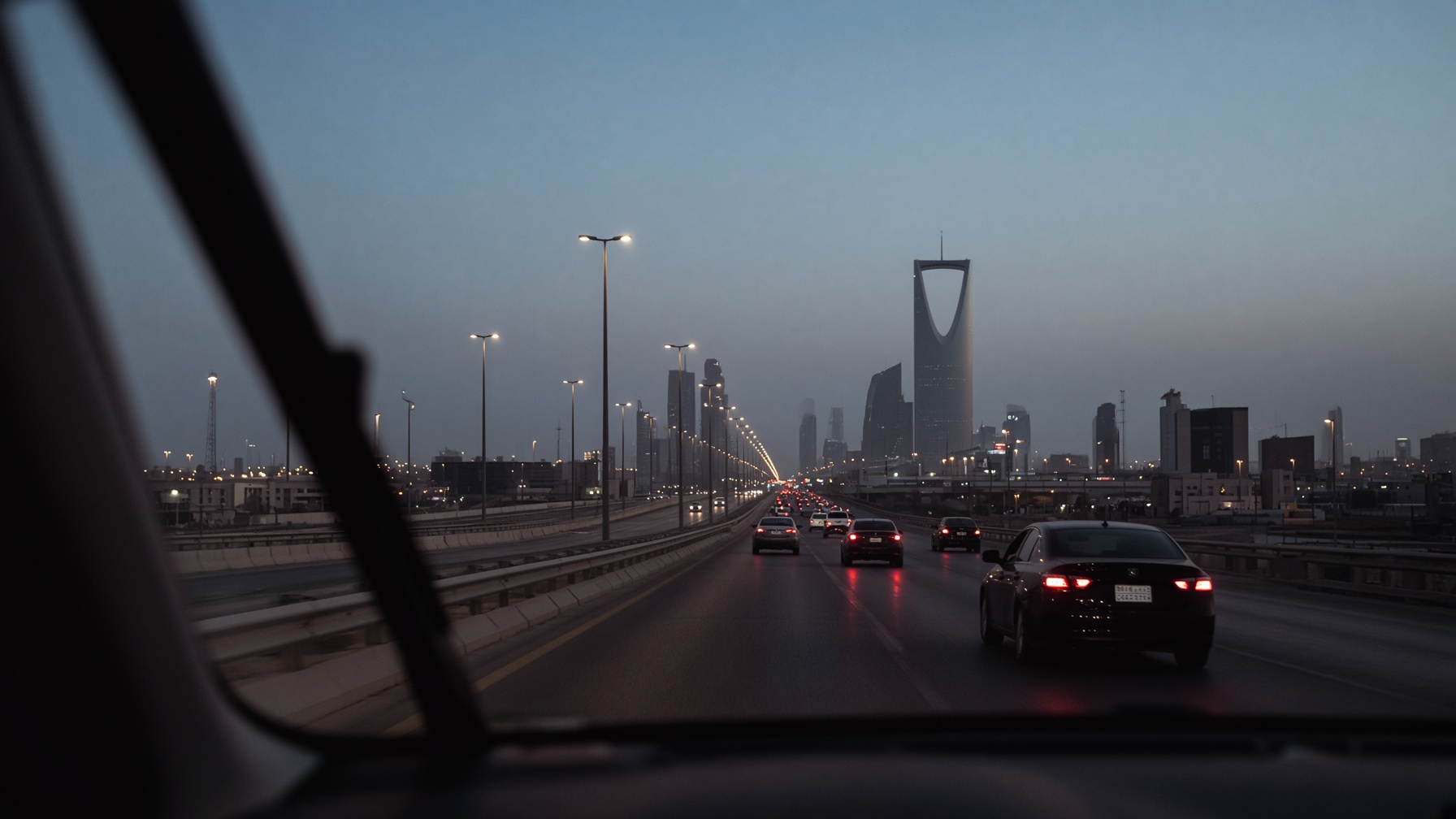
You will not feel most Saudi traffic fines. There is no siren, no conversation, no person to whom you can explain that you were only a little over. A camera on a gantry, or a parking rule you did not see because the sign was behind a truck, writes a number against the vehicle and then against a person. Months later the iqama renewal does nothing, or the exit re-entry stops at the last step, and somebody in the office says the word “fines” as if you should have known.
You should have looked. This page is about looking, paying the real amount, and refusing the man who says he can make the number disappear. It is not a guide to beating cameras. The cameras are not the interesting part. The interesting part is the morning your travel depends on a bill you never opened.
How a fine finds your name
If the car is registered to you, the fine is yours in the way that matters. If you borrowed a colleague’s car, the fine may still be argued between you, but the system’s first opinion is the registration. If a rental company calls you two weeks after the drop-off, they are often calling because the system called them. Rental contracts usually let them add the fine, and a fee of theirs, to your card. Read that line before you feel betrayed. Betrayal is not a payment method.
The list that counts
Open Absher, on your phone, and go to the traffic services. The list against your iqama is the list. A website that texts you a scary total is not the list. A cousin who “checked in the system” is not the list unless he is looking at your screen, with you, and then he should not be holding the phone.
Read every line. Date, place if it shows, amount. Some fines take days to appear. If you drove on Thursday and the list is empty on Friday morning, look again next week before you decide you are innocent. Innocent is a pleasant theory. The gantry does not share it.
Shared cars and company cars
A company car is where friendships go to be priced. If five people drive it, five people believe the fine is the other four. Ask, in the first week of using it, whose iqama the vehicle sits on and who is told when a fine lands. If the answer is “whoever checks,” nobody checks. Put a name on it. A group chat called “the car” is not a name.
- Your own car: look every month, not when you renew.
- A borrowed car: ask the owner the next day, not after he has paid and cooled.
- A rental: photograph the contract line about fines before you leave the lot.
- A company car: one human is responsible for opening the list.
What the fine does to the rest of your life
A small fine feels private. It is not private to the services that refuse to proceed while it is unpaid. People discover this in three places, and all three are bad times to discover it.
Renewal
Iqama renewal is commonly unable to complete while traffic fines show as unpaid. The button does not always say “pay your fine” in language a newcomer trusts. It fails, or it tells the sponsor something vague, and a week is lost. The worker’s own renewal fee is often the employer’s job. The fine is not that fee. Do not wait for HR to notice a camera from a night you drove to Diriyah. Look yourself, before the expiry month, and pay what the official screen asks. The renewal note on this site is the rest of that checklist. This is the part that blocks the checklist.
Leaving the country
Exit re-entry can stall for the same family of reasons: something unpaid, something expired, a passport that is suddenly too short. A fine is one of the somethings. If you are buying a ticket for a funeral or a wedding, open the fine list before you pay the airline. Paying a fine is annoying. Paying a fare you cannot use, because the visa would not issue at 11 p.m., is a different kind of annoying.
A car you want to sell or give back
Transferring a vehicle, or closing a rental without a surprise, goes faster when the list is clear. Buyers who know this country ask. If you are the buyer, you ask. A discount that exists only because “there might be a small fine” is not a discount. It is a coin toss you are paying for.
Pay the official riyal
The amount in Absher, or in the official payment it sends you to, is the amount. It can be paid through the channels the screen offers, often alongside other government payments people already use for bills. I am not going to invent a second price list here. Speed limits and parking rules are published by the traffic authority and they are updated. A blog table from last spring is how you budget the wrong hundred riyals and then argue with a cashier who can see the real figure.
Do it while the amount is still the amount
Fines that sit can become a larger problem than the original number, and they certainly become a larger problem for your plans. Pay when you see the line. If you dispute a fine, dispute it through the official objection, inside the time the service allows, and do not assume the objection pauses your flight. Some people win objections. They do not win them by shouting at a rental desk. Keep the photo of the sign if you have it. A feeling that the camera was unfair is not a file.
What a shop cannot honestly sell
You will be offered erasure. The offer sounds like a favour from someone whose brother works “inside.” Sometimes the brother does work inside, which is worse, because then you are not buying a service. You are asking a person to misuse a job. Sometimes there is no brother, and the shop simply takes your login, pays the fine from your own future, and charges you double for the privilege of having typed.
- No one needs your Absher password to tell you a fine exists. The list is on your phone.
- No one can honestly delete a camera fine because you are a good customer.
- Paying through a middleman does not hide the fine from the iqama. The system already wrote it there.
- If a shop pays, get the official receipt number and then look at your own Absher until the line is gone. Their screenshot is not proof.
The month before you need anything
Pick a day that is not the day you fly. Open the list. If it is empty, good. If it is not, pay, then look again until the line has left or shows as paid. Tell the sponsor only if the renewal is theirs to press and they need to know the blockage is gone. You do not owe the entire office a story about how fast you were going.
If a fine is in a name you do not recognise, or on a plate you never drove, do not pay it in a panic to “clear the screen.” Panic payments are how other people’s cars become your hobby. Ask the traffic service, or your employer if it is their vehicle, what the plate is. Match it to a car you can remember. Then pay.
Driving as a guest in your first months
If you have just arrived, the expensive education is the ring road at night, a speed you brought from another country, and a limit that dropped while you were looking at the tower. The first month does not require a car. If you drive anyway, assume you are being measured. Leave earlier. The appointment will still be there. The gantry will also still be there, which is the point.
A licence, when you get one, does not wipe fines. It sits beside them. The licence note is about obtaining it. This note is about not letting the road undo the residency you obtained it for.
If you are already stuck
Renewal refused, ticket booked, shop offering a miracle: open Absher before you call the shop. Pay every fine that is truly yours. Wait until the screen agrees they are paid. Then ask HR to try the renewal again, or try the exit visa again. If it still fails, the blockage may be something else: the iqama date itself, a passport, a levy, a finger that has not been updated. Those are different problems. Paying a second stranger will not distinguish them.
Write down the Arabic message, even if you only copy the letters badly, and ask someone you trust to read that message. Do not hand them the phone unlocked and go and make tea. Stand there. The message is usually plainer than the panic.
This desk cannot see the fine, cannot pay it, and will not accept a photograph of your Absher home screen in order to guess. If you want to tell us the wording of an error, use the contact page and keep the numbers that identify you out of the mail. We can tell you which note is nearest. We cannot clear a record.
Conclusion
A traffic fine in Saudi Arabia is a small event on the road and a large one on the iqama if you leave it. Look on Absher before a renewal and before a flight. Pay the figure on the official screen. Object only through the objection, and do not build your travel on the hope that the objection wins tonight. Refuse anyone who sells deletion. The camera already did the only part that was secret. After that, the bill is just a bill, and bills are survivable when you open them.
Questions people actually ask
Can a traffic fine block Iqama renewal?
Unpaid fines commonly leave the renewal unable to finish, and they can stall an exit re-entry the same way. The screen will not always explain itself kindly. Check the traffic list on Absher before anyone presses renew, and before you buy a ticket that depends on leaving.
Where do I see Saudi traffic fines?
In Absher, under the traffic services, on the iqama that is yours. That amount is the amount. A text message from an unknown number, or a total a friend remembers from his own car, is not your fine. Lines can take a few days to show after the drive.
Should I pay a shop to remove a traffic fine?
No. Pay the official amount through the official payment. A shop that offers to erase a fine is selling a story. If they only offer to type, you can type. If they ask for your Absher password to do it, leave. When a real payment is made, confirm on your own screen that the line has gone.
Related notes
Updated 18 October 2026. KSA GUIDE is independent and based in Riyadh. We are not the traffic police and not Absher. The figure on the official screen is the fine.