
Journal · Travel
Come when the stone is cool enough to walk on.
October to April if you want Riyadh, AlUla and the desert on foot. The coast can take an evening later. Ramadan and Hajj are not ordinary weeks.
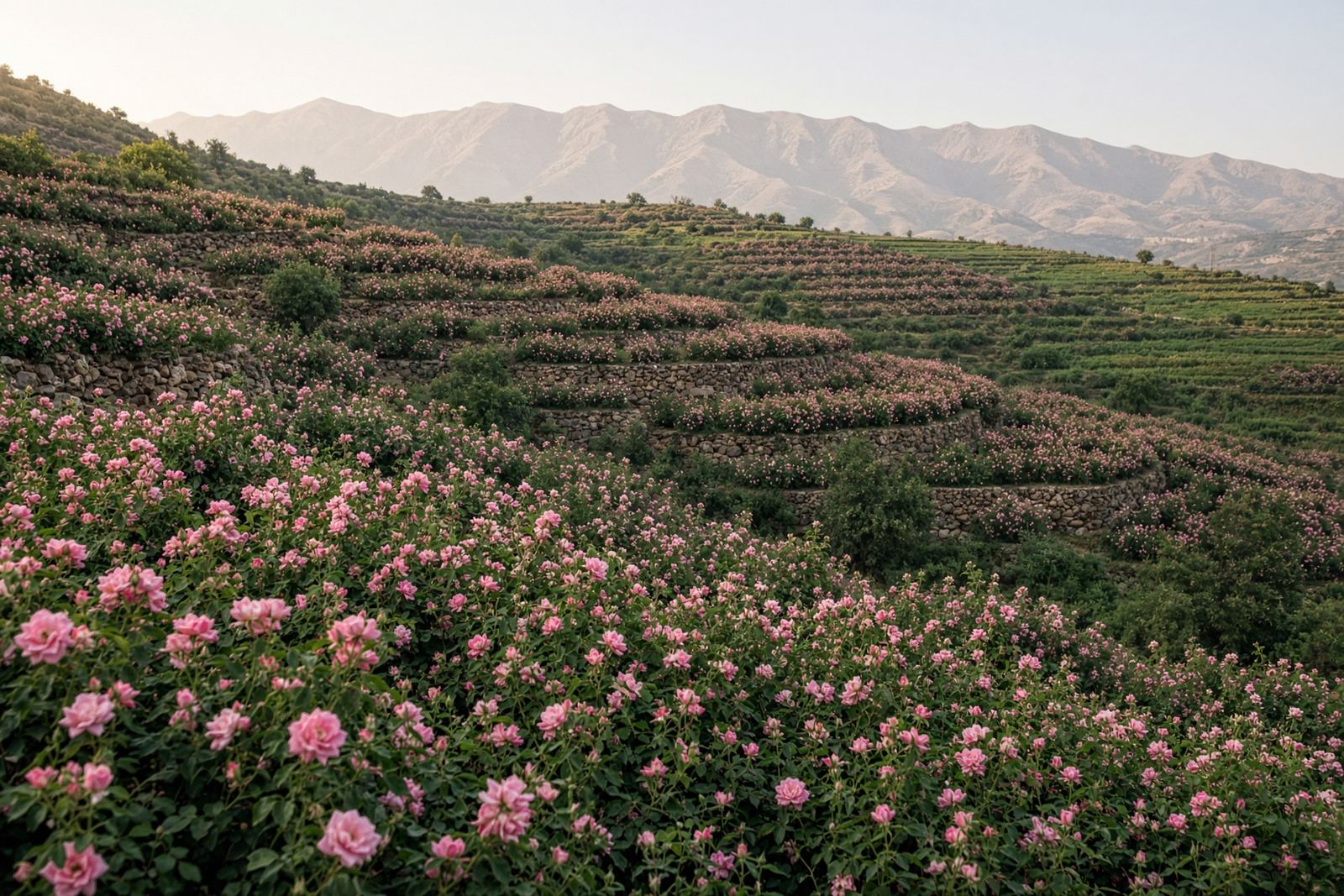
“Best time to visit Saudi Arabia” is a question that pretends the country is one place. It is not. Riyadh in July and Jeddah in January are different animals. AlUla at noon in August is a bad idea told confidently by someone who has not stood on that sandstone. Taif in April smells of roses and is a reason to drive up a mountain. Abha in summer is where people who live here actually go when they have had enough of the interior.
The short answer, if your trip is the capital, the desert and the old stones: October to April. The longer answer is which city, and whether your dates sit on top of Ramadan or Hajj. Weather is the easy half. The other half is whether the city is keeping ordinary hours.
The interior, where the season is obvious
Riyadh, Diriyah, AlUla and the Edge of the World are pleasant in that October-to-April window and harsh outside it. Pleasant means you can walk after four o’clock and not feel you have made a mistake. Harsh means the plan becomes a car, a museum, and an evening, and you should admit that before you book a midday tomb slot.
The weeks I would actually fly
October, November, February and March. The light is kind, the stone is not trying to cook you, and the days are long enough to waste one. December and January are also good, often clearer, and busier, because everyone else has read the same sentence you are reading. If you want AlUla without feeling processed, avoid assuming the holiday fortnight will be empty. It will not.
July is not a personality test
Summer afternoons in the capital are not a sightseeing plan. They are a reason to be indoors. People who live in Riyadh know which hours to surrender. Visitors who have four days and a list of outdoor places do not. If your only free week is July or August and you must see the interior, start at opening, stop at noon, and do not describe the trip afterwards as if the country had failed you. You picked the week the pavement wins.
- First trip, interior and desert: October, November, February or March.
- December and January: still kind, more people.
- May and early June: possible, already hot by midday.
- July and August in Riyadh or AlUla: evenings and indoors, or go somewhere higher.
The coast does not follow the capital
Jeddah and the Red Sea stay warm, and they stay humid. The evening still works in months when Riyadh has given up. That is why a Jeddah night can be the right use of a shoulder season, and a Jeddah noon can still be miserable. Give the city an evening, not a march at one o’clock. The Jeddah note is that shape: eat, walk Al-Balad while it is lit, sit by the water, do not add Makkah because the map looks close.
Taif, for a short season that is actually short
Taif sits in the mountains above Makkah and is cooler than the coast. The rose season is roughly March to May. It is a reason to drive up, not a reason to skip Jeddah entirely, and it is not a season you can move to July because your tickets were cheaper. Outside those weeks Taif is still a milder hill station. It is just no longer the week the farms are doing the thing you saw in the photograph.
Abha, which is the real summer answer
Abha and the Asir mountains are the summer escape Saudis use. The air is thinner, the slopes go green, evenings can be genuinely cool. They are not a day trip from Riyadh. If you have a week in August and you want to be outside, this is the honest booking. If you have a week in August and you want AlUla, you want a different week.
Dates that are not weather
Ramadan
Ramadan moves. It changes opening hours, meals and the mood of every city. Days are quieter. Nights are late, bright, and full of people who have been waiting all afternoon to eat. It can be a beautiful time to be here, especially if you are ready to shift your clock. It is a bad time to expect a normal lunch, a full set of shops at two, or a guide who will pretend the fast is not happening. If you are visiting family, ask them what time they actually eat, and book nothing that collides with it.
Hajj, which is not a festival you wander into
Hajj is not a casual week in Makkah. Permits, hotels and the streets change. A tourist eVisa is not a Hajj visa. If your dates sit on top of the pilgrimage, read the official guidance before you book a room that will not let you near the place you photographed. Umrah is a different, narrower permission and it still deserves a current reading, not a blog’s memory. The tourist visa note says the same thing: the official page is the rule, a hotel voucher is not a permit.
Weekends and the hour around prayer
Friday is not a free day for errands. Shops close. The hour around prayer empties ordinary plans and then fills the places families choose. A first Friday in Riyadh is Diriyah or nothing much, not a ministry and a mall and a viewpoint. Build that into the week even in perfect weather. Perfect weather does not open a closed door.
How to spend a first week without ruining it
Fly into the cool months. Give Riyadh two days if you want the city and Diriyah, not six hours between flights. Give AlUla two nights. The tombs want a morning when the gate has just opened, and Old Town wants an evening. One night is a rush that people later call AlUla and should not. Give Jeddah an evening if the route allows it. Leave the desert drive, including the Edge of the World, for daylight, with water, and not bolted onto a late lunch.
Do not try to do the Kingdom. The map is large and the roads are fast and the distances still win. Riyadh to AlUla is a flight, not a spontaneous afternoon. Jeddah to Makkah is closer and still not something you add because the evening feels unfinished.
- Two nights in AlUla, Hegra first thing, Old Town after dark.
- One unhurried evening in Jeddah, not a midday march.
- Diriyah on a Friday evening, or skip Friday errands entirely.
- Desert in daylight. No third city “on the way” unless you have driven it before.
If you already live here
Residents do not get to choose October. You get the calendar you were given, and you learn the hours. Summer in Riyadh is survivable because the buildings are cold inside and the day starts again after the worst of the sun. That is a life, not a holiday. When friends ask when to visit you, tell them the truth: come between October and April if they want to walk with you, and come in August only if they are happy to sit. Do not host them through a July list of outdoor plans to prove the city is fine. The city is fine. The pavement is not, at two in the afternoon.
School holidays and national holidays stack on top of the weather. The week everyone in the Gulf travels is not a secret cheap week. If your dates are fixed by a wedding or a leave balance, pick the city that matches the month instead of forcing AlUla into August because the photographs were taken in February.
Conclusion
Come when the stone is cool enough to walk on. For Riyadh, Diriyah, AlUla and the desert, that is October to April, and the easiest weeks inside it are October, November, February and March. Jeddah can take an evening later, with humidity as the price. Taif’s roses are roughly March to May. Abha is the summer escape. Lay the dates over Ramadan and Hajj before you congratulate yourself on the airfare. Weather is only half of best. The other half is whether the week you chose is an ordinary week.
Questions people actually ask
What is the best month to visit Saudi Arabia?
If the trip is Riyadh, AlUla or the desert, October, November, February and March. December and January are also good and usually busier. There is no single best month for the whole country. Jeddah’s best use is often an evening in a wider stretch of the year than the capital allows.
Is summer a bad time to visit Saudi Arabia?
Summer afternoons in the interior are harsh. You can still be in Riyadh if you stay indoors through the worst hours. You should not plan long outdoor walks in AlUla or at the Edge of the World. For heat, look at Abha and the south, or accept a Jeddah evening and a short walk.
Should I avoid Ramadan or Hajj?
Ramadan is not something to avoid if you want to see the country as it actually lives. It is something to plan around: later meals, different hours, less of the ordinary Tuesday. Hajj is different. Do not treat Makkah that week as a casual add-on. Read the official guidance before you book.
Related notes
Updated 19 October 2026. KSA GUIDE is independent and based in Riyadh. Seasons are practical, not a forecast. Check Hajj dates on official sources before you book Makkah.