
Journal · Food
Eat where the room was already full.
Kabsa if you are new. Mandi if you want the smoke. Saleeg if you are in the Hijaz. The room tells you more than the menu.
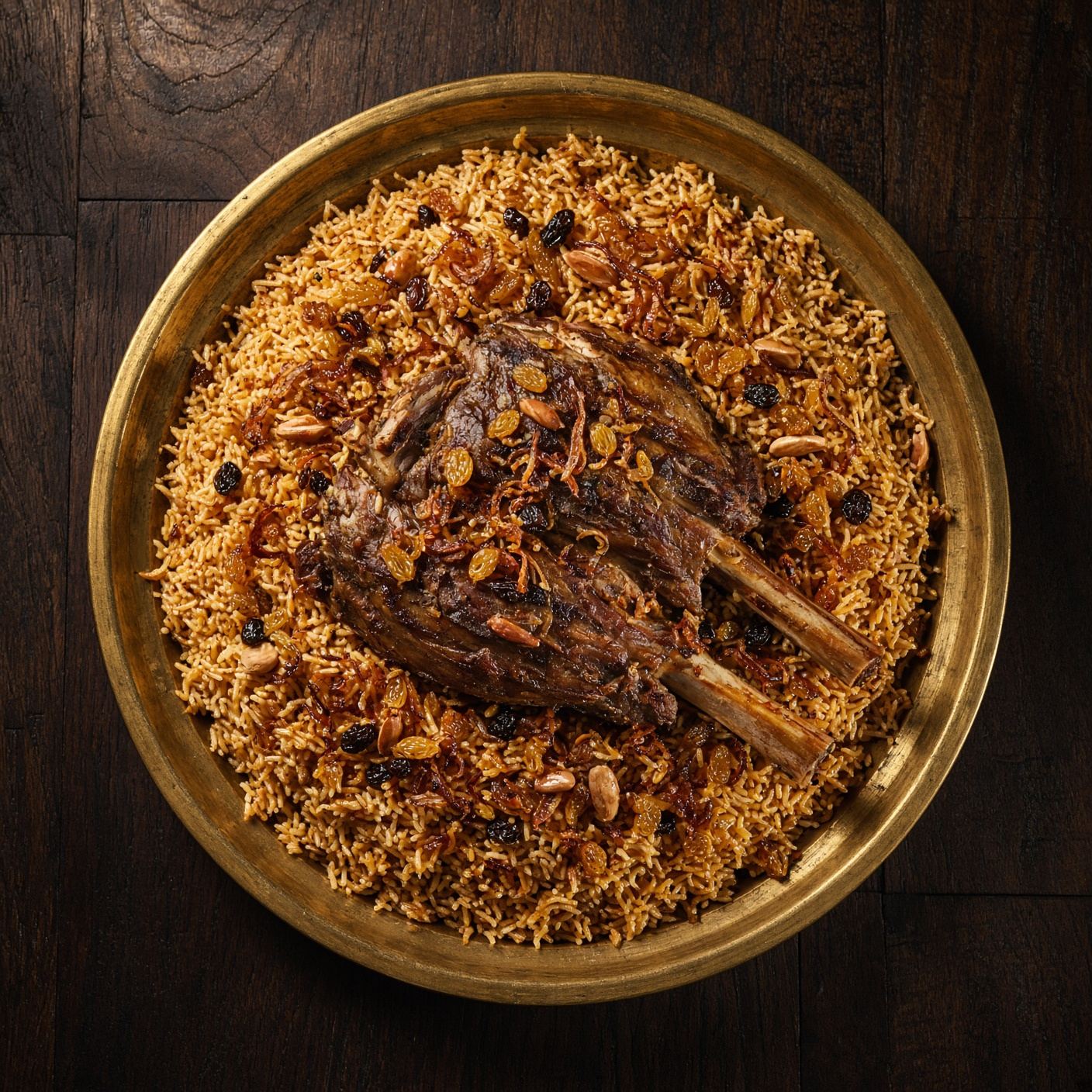
Start with kabsa if you have never sat at a Saudi table. It is spiced rice and meat, finished with nuts more often than a cookbook admits, and it is the default for a reason. People argue about whose mother’s is the real one. That argument is the point. You are not looking for the platonic rice. You are looking for a kitchen that cooks it on a day when nobody famous is coming.
The rest of this note is how not to order the performance by mistake. A performance can still be a good lunch. It is not the table.
The plates, without the lecture
Kabsa
Rice, meat, a spice that should taste like the pot and not like a jar labelled “kabsa mix” and nothing else. Chicken is the everyday version. Lamb is the version people cook when the table matters. Eat it with your right hand if the room is eating that way, or with a spoon if the room is. Copy the room. Do not announce that you are “trying the traditional way” while everyone else has chosen the spoon and would like to finish.
Mandi
Mandi is the smoky relative. The rice takes the pit, the meat takes the pit, and a bottled sauce cannot fake the hour. You meet it more often in the south and in restaurants that bother. If a place in a mall promises mandi and the rice arrives pale and sweet, you have had rice. You have not had mandi. Order kabsa there instead, or leave. There is no prize for finishing the wrong plate to be polite to a brand.
What the Hijaz actually eats
In Jeddah and the west, saleeg is the comfort plate: rice cooked down with milk, usually beside chicken, mild in a way that is not an apology. It is what people want when they are tired or unwell or simply at home. Jareesh is cracked wheat, slow and savoury, and it rarely survives a hotel “Saudi night,” because it does not photograph and it takes time. Mutabbaq is the thin crisp fold, savoury or sweet, eaten with your hands. It should crackle. If it tastes like a reheated wrap, it has been waiting under a lamp. Send it back in your mind and order something else. You do not owe the lamp a clean plate.
- New to the table: kabsa.
- Want smoke, and the place has a pit: mandi.
- Jeddah, comfort: saleeg. A fold to share: mutabbaq.
- Wheat, and nobody is trying to impress you: jareesh, if they actually make it.
The test is the room
If the room is already full of people who are not photographing the rice, sit down. That is the whole review. If you are the only table, and the kabsa arrives in a ring mould that took ten minutes to build, you are paying for the shape. A rice pan that is not decorated, in a room that was busy before you arrived, is the more honest lunch. You can still enjoy the mould. Just do not fly home and describe it as how the city eats.
Menus that explain too much
Three languages and a paragraph under every dish means the kitchen expects strangers. Strangers are allowed. The paragraph is not proof of anything except that a designer was paid. Read the room again. Are the other tables ordering with a point of the finger, or are they reading the same paragraph you are? Finger is better.
The hotel buffet
A hotel that lists kabsa, mandi, saleeg and jareesh has usually flattened them into one orange rice and a tray of meat with a label. Eat it if you are tired and the alternative is a sad club sandwich. Do not describe it afterwards as the Kingdom’s table. You were in a hotel. The hotel was fine. The table is somewhere else, probably noisier, and it will not have a chocolate fountain.
How to sit, without a ceremony you invent
Wait to be waved to a table if someone is standing there to wave. If nobody is, sit where a leaving group has just stood up, not in a corner that was empty because the air conditioning misses it. Share if the dish is a platter. Taking the nuts off the top and building them into a pile on your side is a child’s move. Leave some of the good bits where the next hand can reach them.
Spice on the side is normal. Asking for the kitchen to remake a family rice “not spicy” may get you a polite yes and a worse plate. Add yogurt. Add salad. The heat in a good kabsa is warmth, not a dare. If it really is a dare, you are allowed to say so. You are not required to perform endurance.
- Right hand if you are eating with a hand. The left stays off the rice.
- Do not reach across a face. Ask, or wait.
- Phones flat on the table for one picture, then eat. A ten-minute shoot cools the meat and irritates the next table.
- If you are a guest in a house, eat less than your appetite the first round. They will insist. That insistence is the meal.
Dates, then the coffee
Dates come first more often than a dessert menu. They are not a starter you skip because you are saving room. A date and coffee is how a visit begins and how it ends. Gahwa is a small cup, cardamom, sometimes a little saffron, and it is a welcome. It is rude to treat it as a large coffee you will finish later at your desk. Drink it while it is offered. One cup is enough if you do not want another.
The tilt
A small tilt of the cup is the polite way to say you are finished. You do not need a speech. Do not rush the person who poured it, and do not wave the cup away as if the pour were a mistake. If you accept a third and then ignore it, the host notices. Accept what you will drink. Stop when you have stopped. In a restaurant this is gentler than in a house, but the cup is still small on purpose. Nobody is trying to sell you a bucket of coffee.
What not to order just to seem knowing
You do not need a rare dish on the first night. You need one plate the city recognises. Kabsa in Riyadh, saleeg or mutabbaq in Jeddah, and coffee you actually finish. The person who orders five things “to try the cuisine” gets five lukewarm tastes and a photograph. The person who orders the thing the next table ordered gets dinner.
Money and the ordinary bill
An ordinary plate, the kind a full room is already eating, is often in the band of SAR 25 to 60. A mall dinner and a hotel “experience” are not that plate. They can cost whatever the chandelier cost to dust. Neither number is a moral fact. Just know which meal you are in. The cost note says the same thing about the month: delivery apps and coffee are what break a careful kitchen. A Saudi table, eaten in a room, is usually the cheaper and better of the two.
Tip if the room tips, and do not make a ceremony of it. Pay the bill when it comes. Holding a table through a long conversation after the plates are gone, in a small place that is still seating people, is the expensive way to be liked. In a house, of course, you stay. You are not in a house just because the rice was good.
If you are cooking for someone who lives here
Do not attempt the feast on the first try if you have never made the rice. Buy the kabsa from a place they already trust, put it in your own dishes if you must, and spend your effort on the coffee and the dates and the fact that you asked what they eat on a normal night. A Saudi guest can taste effort that went into the wrong spices. They can also taste that you cared enough to ask. Asking wins.
And if they cook for you, eat. The second helping is not a test. Leaving a polite amount is fine. Leaving most of it because you were nervous reads as dislike. Say it is good if it is good. It usually is.
Conclusion
Order kabsa until you know why you would order something else. Mandi if the pit is real. Saleeg and mutabbaq when you are in the Hijaz. Jareesh when a kitchen still bothers. Sit where the room was already full, eat what that room is eating, and close with a date and a small cup of gahwa. Tilt the cup when you are finished. A hotel buffet that lists every name on one orange rice is a tired night, not the table. The table is noisier, plainer, and better.
Questions people actually ask
What should I order at a Saudi restaurant?
Kabsa, if it is your first time: spiced rice and meat. Look at what the full tables ordered and copy them if your nerve fails. In Jeddah, saleeg is the comfort plate and mutabbaq is the crisp fold. Avoid the place that is empty and beautifully plated until you already know what good tastes like.
What is the difference between kabsa and mandi?
Kabsa is the spiced default. Mandi is smoky because of the pit, not because someone added liquid smoke. If a kitchen serves them as the same orange rice with two labels, you are in the flattened version. Eat if you are hungry. Do not take notes.
How do you finish Saudi coffee?
Drink the small cup while it is hot. A slight tilt tells the person pouring that you are done. One is enough. A third that you leave untouched is ruder than refusing the third. It is not a latte, and it is not a prop.
Related notes
Updated 21 October 2026. KSA GUIDE is independent and based in Riyadh. We do not run a restaurant and we do not take reservations.